

Endoscopic Odontoidectomy
What is Endoscopic Odontoidectomy?
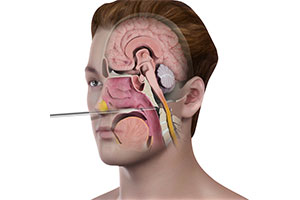
Endoscopic odontoidectomy is a minimally invasive neurosurgical procedure used to remove the odontoid process (dens) - a small bony projection of the second cervical vertebra (C2) - when it compresses the brainstem or upper spinal cord. The surgery is typically performed using an endoscope, most often through the nose (endoscopic endonasal approach) or occasionally through the mouth. This approach avoids large external incisions and reduces disruption to surrounding tissues.
When is Endoscopic Odontoidectomy Recommended?
Endoscopic odontoidectomy is recommended when the odontoid process causes irreducible anterior compression of the brainstem or upper spinal cord, leading to neurological symptoms. It is commonly advised in conditions such as basilar invagination, congenital craniovertebral junction anomalies, rheumatoid pannus, trauma, tumors, or infections, especially when posterior stabilization alone cannot adequately relieve compression.
How Should I Prepare for Endoscopic Odontoidectomy?
Preparation for endoscopic odontoidectomy includes MRI and CT scans, neurological and ENT evaluations, routine blood tests, and a review of medications. You may be advised to stop blood thinners, fast before surgery, control medical conditions, stop smoking, and discuss the need for posterior spinal stabilization. Careful preoperative planning helps ensure a safe procedure and smoother recovery.
What Should I Expect During Endoscopic Odontoidectomy?
During an endoscopic odontoidectomy, you are placed under general anesthesia, and a high-definition endoscope is introduced, most commonly through the nose, to reach the craniovertebral junction without external incisions. Using real-time imaging and neuromonitoring, the surgeon carefully exposes the odontoid process and removes the compressive bone and surrounding pathological tissue with specialized instruments. This decompression relieves pressure on the brainstem and upper spinal cord. Once adequate decompression is confirmed, bleeding is controlled, and the surgical area is closed. In many cases, additional posterior cervical stabilization is performed before or after the procedure to maintain spinal stability.
What does Postoperative Care and Recovery for Endoscopic Odontoidectomy Involve?
Following surgery, patients are closely monitored in the recovery room or ICU for breathing, swallowing, and neurological status. Pain is managed with medications, and antibiotics may be given to prevent infection. If required, a cervical collar or posterior cervical fusion helps stabilize the spine. Swallowing is gradually resumed, starting with liquids, and speech or swallowing therapy may be advised. Early, guided mobilization and physiotherapy support recovery, while regular imaging and follow-up visits ensure proper decompression and healing.
What are the Risks and Benefits of Endoscopic Odontoidectomy?
Endoscopic odontoidectomy offers significant benefits but, like any surgery, also carries certain risks.
Benefits:
- Relieves brainstem and spinal cord compression
- Minimally invasive approach with no external incisions
- Less tissue damage, pain, and blood loss
- Faster recovery and shorter hospital stay
- Better visualization with high-definition endoscopy
- Lower infection risk compared to open surgery
Risks:
- Infection or bleeding
- Cerebrospinal fluid (CSF) leak
- Nerve or spinal cord injury
- Swallowing or speech difficulties (usually temporary)
- Need for additional posterior spinal stabilization
- Anesthesia-related complications